


Closer Look · About 7 min · 5 chapters
Turning Different Views into One Direction
When ieso was moving from human-delivered therapy towards AI-delivered care, Clinical, AI, Product, Engineering and commercial teams did not all picture the same destination. A vision written by one person would not settle that.
I planned and facilitated workshops in the UK and US, bringing those disciplines together with people who had lived experience. We explored what ieso should look like in five years for patients, clinicians and customers, then worked through the tensions rather than smoothing them over.
I synthesised the workshop material into journeys and service blueprints. These gave everyone one picture to work from, while sharing drafts allowed contributors to recognise their input, challenge assumptions and refine the direction together.

Clinical, AI, Product, Engineering, Sales and Marketing perspectives brought into the same exercise

Workshop themes synthesised into a service blueprint that became the basis for the work that followed
Building Belief
The North Star Film
The central output was a short film showing how an ieso digital therapeutic could fit into the life of someone living with generalised anxiety disorder. It used a medication analogy — the right ingredient, dose and timing — to explain personalised treatment to audiences who did not think in product terms.
Treatment appeared as modular Elements of Care. Each one supported a therapeutic outcome and could be assembled into a plan for the individual, delivered in different formats and backed by clinical oversight. The film created real excitement across the company and became a coherent reference in partner, investor and internal conversations. Some of its metaphors—particularly Elements of Care—were still being used years later.


Inviting Discussion
UX Comics
Several years later, a broader vision project needed a different kind of artefact. I used deliberately rough UX comics to show the experience from the viewpoints of customers, patients and clinicians.
The lower fidelity made it clear that the story was still open. People could challenge assumptions, add missing detail and reshape the direction together.


Cycle One
Building to Learn
The vision work led to a small cross-functional R&D group: two clinicians, two AI scientists, one engineer and me as designer. I co-led the group in six-week cycles, building demos we could react to instead of adding more detail to a slide deck.
This was early in generative AI’s adoption. Until then, the product had relied on a non-generative chatbot. Its predictability helped answer safety and regulatory concerns, but conversations could feel rigid and robotic. Generative AI promised something more responsive, while its unpredictability made people understandably wary—particularly in therapy.
The first six-week cycle showed that a more natural conversation did not have to mean abandoning clinical structure. Drawing on ieso’s clinical dataset and working within agreed parameters, the demo responded through voice, text and imagery. Seeing it work changed the discussion from whether generative AI belonged in the product to how it could be introduced responsibly. It later became part of the shipped experience.

An early working prototype used to make the product direction testable

Cycle Two
Balancing Structure and Freedom
The second cycle widened the view from one session to the whole treatment journey. Generative agents are open-ended; therapy still needs direction. With Clinical, AI and Engineering, I mapped a model that paired an agreed focus with personalised exercises and scheduled or on-demand check-ins.
We also agreed conversation-design patterns before writing content: earn buy-in, explain why an exercise matters, use imagery deliberately and adapt the interaction for voice. The aim was to stop clinical language that worked face to face becoming hard to follow on a phone.

Balancing the freedom of generative conversation with the structure therapy still needs
Turning the Vision into Testable Questions
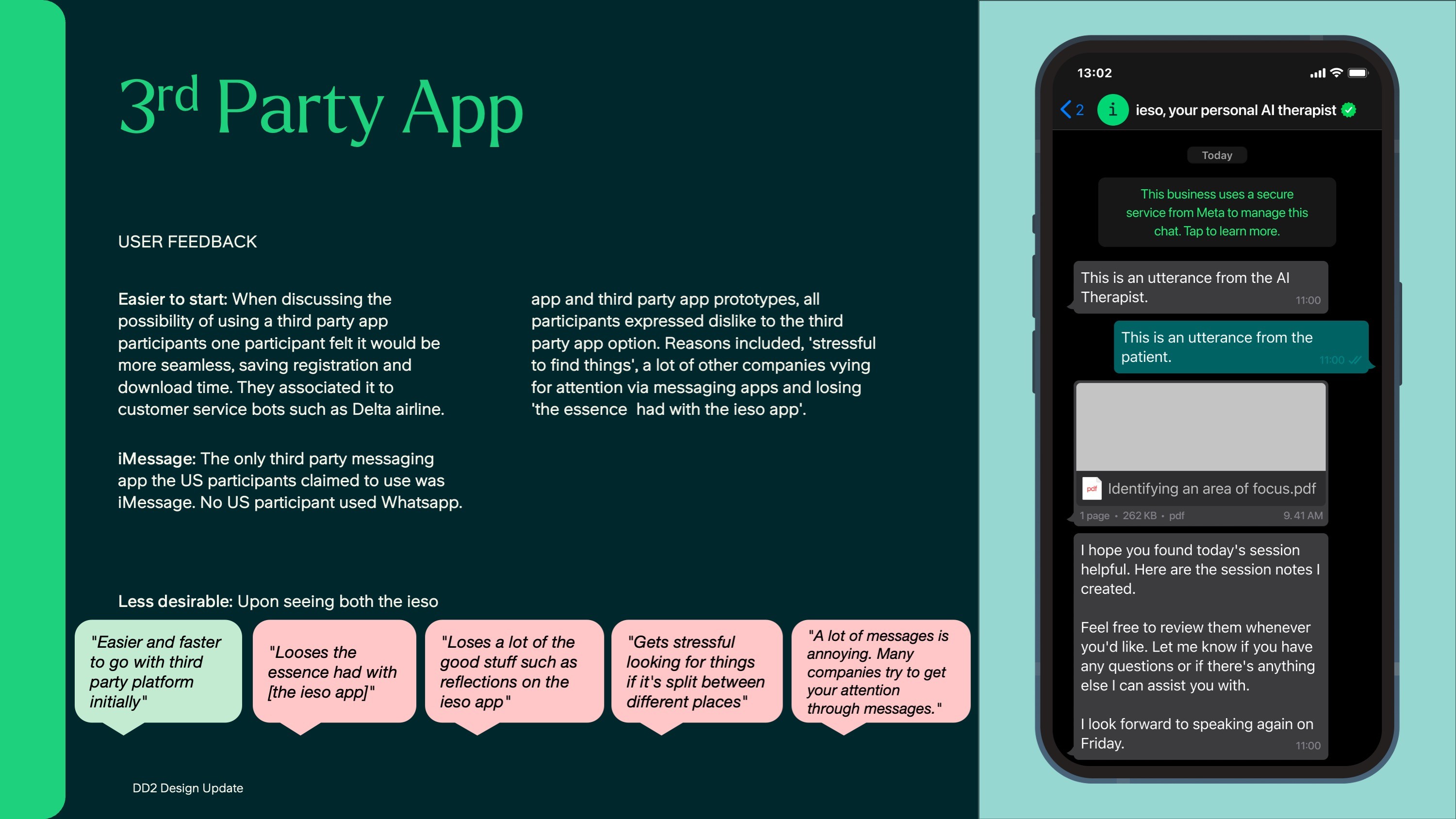
I built low-fidelity interactive prototypes around the parts of the vision that were still assumptions, then ran around ten moderated sessions with people who had lived experience of anxiety and depression.
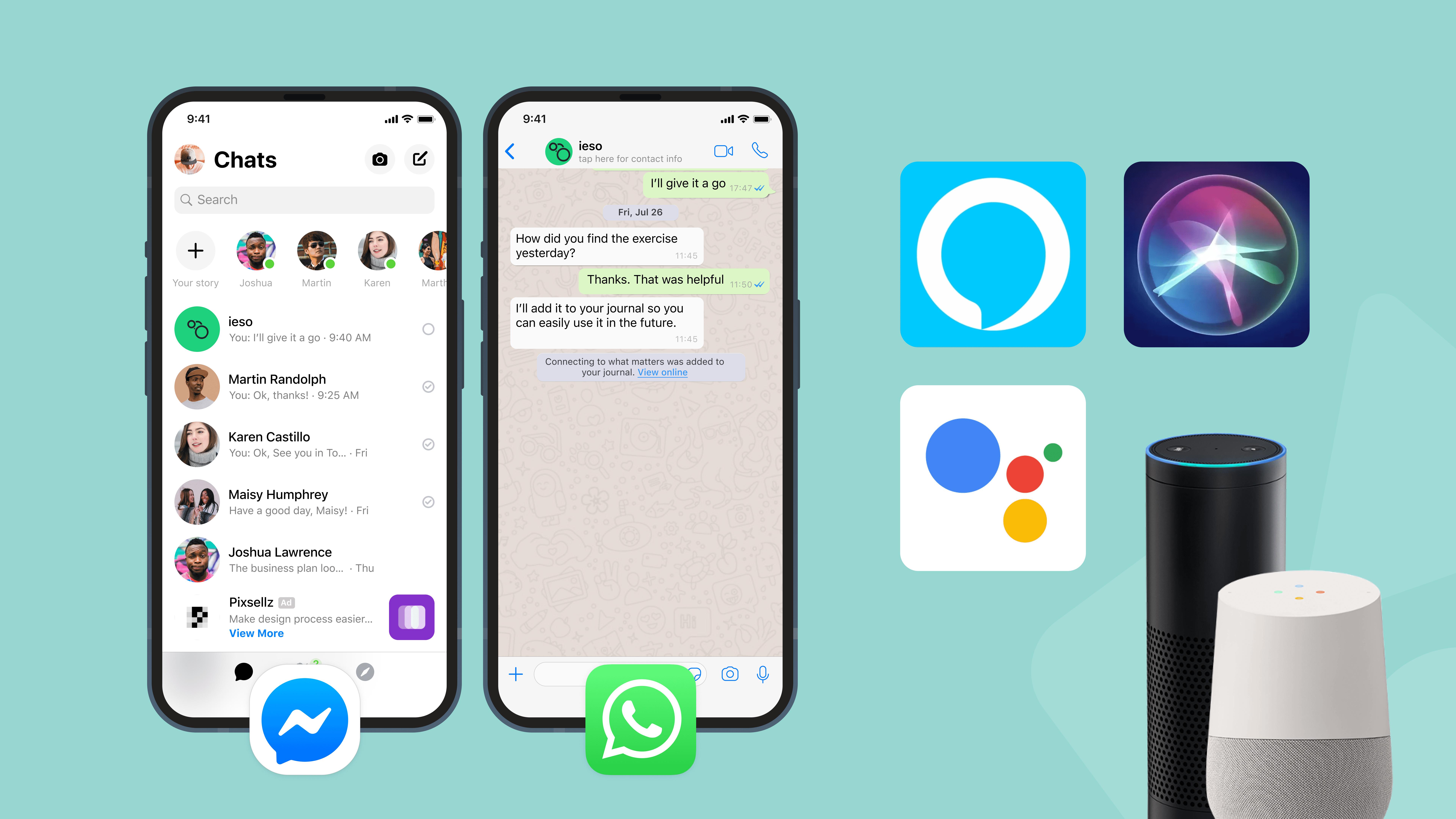
Rather than asking whether people liked the concept as a whole, I focused on specific questions: how much personalisation people would invest in, how structure could support rather than constrain them, and what would be gained or lost if ieso offered therapy only through APIs, using WhatsApp, text messaging or another company’s generic chat platform.

Moderated testing focused on the parts of the vision that were still assumptions


Deciding What Moved Forward
I brought the research findings into a working session with Product, AI and Engineering. We assessed ideas by user desirability as well as feasibility, deciding what could move into the existing product incrementally without waiting for a wholesale rebuild.
The output was not a promise to build the whole vision. It was a set of clearer choices: ideas ready for the roadmap, questions requiring further evidence and longer-term possibilities worth keeping visible. Parts later appeared in the shipped product, and the process gave Design a more direct role in the strategic planning that followed.
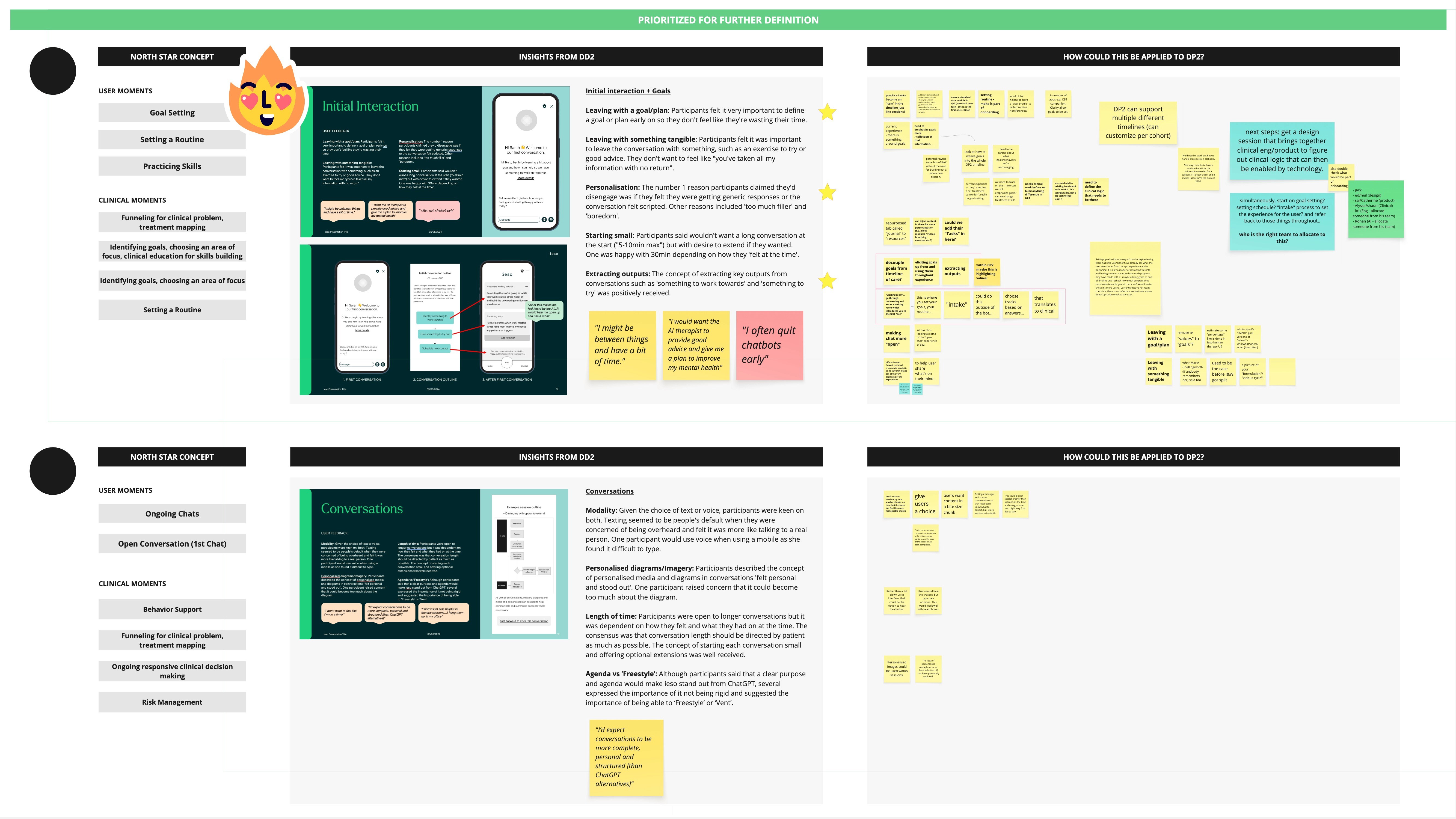
Mapping Product Vision ideas into near-term decisions, further experiments and longer-term possibilities
